(7.5) Using Amazon Marketplace Product Guidance – Finding Potential Products

Amazon Marketplace Product Guidance – Finding Potential Products
Eazyppc welcomes you to the post ‘Amazon Marketplace Product Guidance – Finding Potential Products’ – you should read and be familiar with the previous posts, as Eazyppc uses terms and concepts that were explained in earlier lessons.
With the Marketplace Product Guidance tool, Eazyppc introduces you to 3 key metrics worth noting below. To explore this tool in more depth, you can consult the detailed documentation provided by Amazon Vietnam . In this post, Eazyppc will only highlight the metrics that Eazyppc focuses on when using this tool.
Access the tool via Seller Central > Menu > Growth > Marketplace Product Guidance > select a browse node (product niche) containing the product you want to research. Note that the horizontal blue bars represent the number of units sold for that group.

1/ Compare Units Sold this year vs. last year
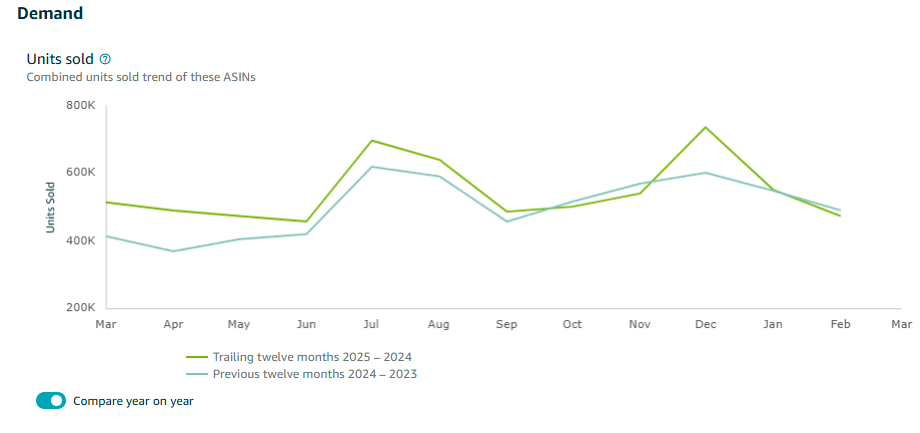
Sellers can quickly check and compare the number of units sold in the selected product niche for the current year versus the previous year. This helps assess whether customer demand in that niche on Amazon is growing, plateauing, or shrinking compared to the same period last year.
Additionally, this relates to the seasonal nature of the product: Based on this data, you can also predict to some extent the seasonality of the niche for the upcoming months of the year, using last year’s results as a reference.
2/ Return Ratio over the last 30 days
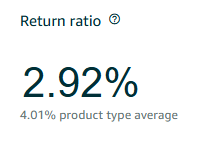
The return ratio can provide various types of information depending on how a Seller interprets it — it may reflect the pickiness of customers, the overall quality of products in the market, or the nature of the product category (for example, fashion niches tend to have higher return rates because customers try items before committing to a purchase), etc. However, what Eazyppc cares about most is — if a product has a high return rate, this is a signal to watch out for, a red flag to avoid. Conversely, a low return rate is a positive indicator when deciding to source the product. You can review return costs here.
3/ Product Feature Analysis (Features)

Product features and attributes are ranked by purchase frequency, helping Sellers better understand which factors customers care about the most. This is an important foundation for developing and selling new products based on real demand, or for optimizing product images, A+ content, and other creatives — used in combination with the analysis of factors covered in Eazyppc’s previous lessons.
Tất cả nội dung trên blog này chỉ nhằm mục đích cung cấp thông tin và chia sẻ kinh nghiệm cá nhân về kinh doanh trên Amazon. Eazyppc.com không đảm bảo bất kỳ kết quả cụ thể nào từ việc áp dụng các chiến lược hoặc thông tin được chia sẻ.
Việc kinh doanh có thể tiềm ẩn rủi ro, và mỗi cá nhân cần tự nghiên cứu, đánh giá trước khi đưa ra quyết định. Eazyppc.com không chịu trách nhiệm đối với bất kỳ tổn thất, thiệt hại nào phát sinh từ việc áp dụng thông tin trên blog này.


Chấp thuận Điều khoản & Chính sách
Trước khi tiếp tục truy cập website Eazyppc.com, bạn vui lòng đọc và đồng ý với: